|  Milmont Site Search:

Foliage & Ornamental Houseplants

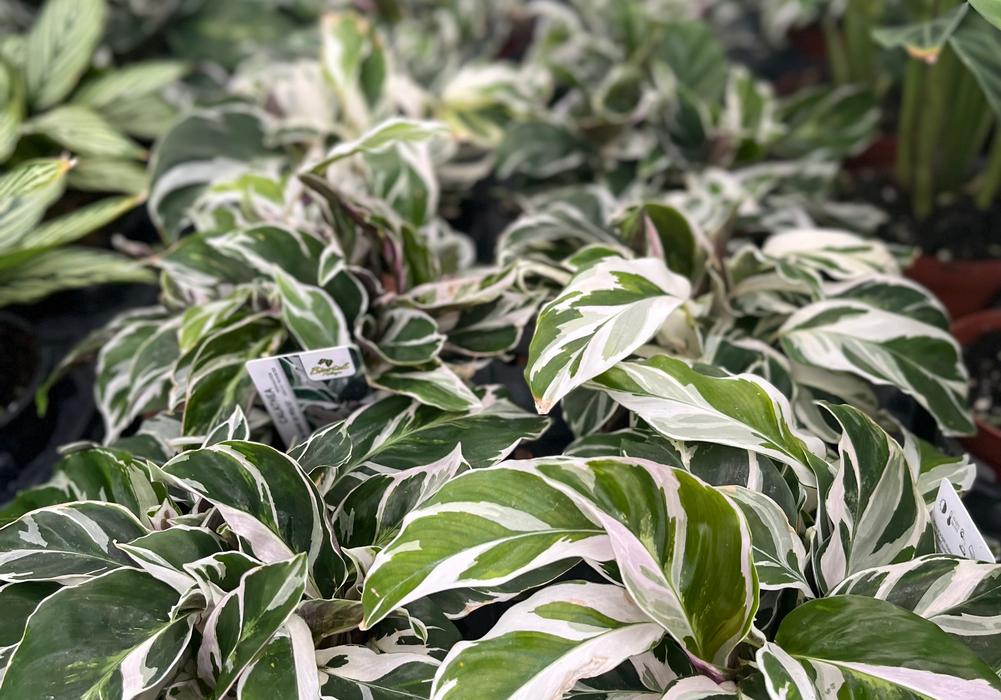
Milmont Garden Center offers a large array of foliage and ornamental houseplants.  Following is a list of plants we carry as well as some basic instructions for their care.  To download the complate article, please see "Indoor Plant Culture."

Keeping plants clean and neat through regular grooming improves the appearance of plants and reduces the incidence of insects and disease problems. Remove all spent flowers, dying leaves, and dead branches. Keep leaves dust-free by washing plants with warm water and mild true soap – avoid detergent, which can cause damage to leaves and buds. Cover the pot to prevent soap from entering the soil. If tips of leaves become brown and dry, trim them off neatly with sharp scissors.

  • 10388    Amaranthus Joseph's Coat 3" Pot
  • 560       Baby's Tears Helxine 3" pot
  • 13243    Baby's Tears Helxine 4" Pot
  • 13208    Bird of Paradise 6" Pot
  • 27459    Black Bat Plant 8" Pot
  • 10477    Bleeding Heart 4" Pot
  • 09066    Bleeding Heart 8" Hanging Basket
  • 24245    Bougainvillea Grove Speciman
  • 20904    Bridal Veil Tahitian Bridal Veil 3" Pot
  • 473       Bridal Veil Tahitian Bridal Veil 8" Hanging Basket

  • 1973      Clerodendrum 4" Pot
  • 22477    Clusia Rosea 4" Pot
  • 25754    Clusia Rosea 6" Pot
  • 22894    Colocasia Assorted Cutbacks 6" Pot
  • 27235    Colochia Mojito 10" Pot
  • 23823    Crypthanthus 3" Pot
  • 23590    Dianella Varigated Tasmanica 8" Pot
  • 25365    Disocactus 6" Pot
  • 12352    Ginger Assorted 6" Pot
  • 22897    Ginger Pinstripe 6" Pot
  • 23019    Grass Juncus Spiralis 4" Pot
  • 22484    Grass Juncus Spiralis 6" Pot
  • 23052    Gynura Purple Passion 6" HB
  • 12527    Hedera Telecurl 4" Pot
  • 11316    Hibiscus 10" Hanging Basket
  • 23595    Homalomena Emerald Gem 6" Pot
  • 15582    Honeysuckle Trumpet Tacoma Tree 10" Pot
  • 13037    Lisianthus Assorted 5" Pot
  • 635       Living Stones 2" Pot
  • 20932    Living Stones Mimicry Plant 2.5" Pot
  • 10795    Lubersii Brazilian Snow 10" Pot
  • 20650    Lubersii Brazilian Snow 3" Pot
  • 23910    Mimosa 6" Pot
  • 25686    Mistletoe
  • 25687    Mistletoe Med
  • 17560    Mule's Ear 8" Hanging Basket
  • 25922    Neoregelia Cosmos
  • 22481    Nepenthes Pitcher Plant 6"
  • 18245    Nepenthes Pitcher Plant 8"
  • 12263    Osmanthus Fragrans (Tea Olive) 10" Pot
  • 9091      Oyster Plant 3" Pot
  • 18808    Oyster Plant Tricolor 3" Pot
  • 12545    Pandanus Varigated 10" Pot
  • 13192    Peacock Plant 4" Pot
  • 14216    Pepper Ornamental Pepper 4" Pot
  • 10494    Pepper Ornamental Pepper 6" Pot
  • 10876    Piggy Back Plant 6" Hanging Basket
  • 10405    Purple Velvet 3" Pot
  • 20696    Resurrection Plant
  • 10396    Scindapsus Silver Satin 8" Hanging Basket
  • 675       Sedum Burro's Tail 6" Hanging Basket
  • 27548    Selaginella Moss 6.5"
  • 20748    Sensitive Plant Mimosa Pudica 3" Pot
  • 23191    Setcreasea Purple Heart 3" Pot
  • 10397    Strelitzia Nicolai White Bird of Paradise 10"
  • 23153    Strelitzia Reginae Orange Bird 10" Pot
  • 12918    Streptocarpella 8" Hanging Basket
  • 22479    Syngonanthus Chrysanthus Mikado 4" Pot
  • 23822    Syngonium Neon 4" Pot
  • 22483    Tacca Bat Plant 6" Pot
  • 22462    Terrarium Foliage 9.25"X3.5" Pot
  • 25920    Volcano Plant-Anthurium Red
  • 23600    Zamioculcas Zamifolia 4" Pot
  • 23914    Z-Z Plant 8" Pot
  • 19161    Z-Z Zamioculcus Zamiifolia Plant 6" Pot

Humidity can be increased by placing plants on trays lined with pebbles and filled with water to within one half inch of the base of the pot. If you heat with wood, keep a pot of water on the stove.

Most plants should not be watered until the soil feels somewhat dry. There are commercially available water meters to determine the soil moisture content of con­tainer and garden-grown plants. However, the old tried and true method of sticking your finger into the soil is the most reliable. With experience you can lift a con­tainer and judge its water content and thus its need for water. Apply enough water to thoroughly saturate the potting soil. In most cases, the soil is saturated when water drains from the bottom of the pot. Placing a sau­cer under the container eliminates water damaging the surface where the container sits. In some cases, such as a root-bound plant, water will drain from a container before the potting soil is saturated. In this case, fill the saucer with water and allow it to be absorbed into the container. Make sure to empty the saucer once water is no longer being absorbed.

Fertilizers are salts and if you do not water thoroughly, salts can become concentrated in a potting soil. High soil-salt concentrations are toxic to roots and can kill a plant. So, regardless of your fertilization method (solu­ble or slow-release), thorough irrigation is necessary to keep salts from building up in the soil. To further avoid salt toxicity and to be on the safe side, one can always use less fertilizer than the recommended rate.

When the weather warms in the spring, houseplants can be put outside. Don’t be too anxious to move your houseplants outdoors, as even a good chill can knock the leaves off tender plants. To avoid cold temperature damage, find out the minimum temperature your par­ticular indoor plants can tolerate. Make sure the out­door light conditions are compatible with those of your plants. Plants can get “sunburned” if you move them from an average indoor light exposure to a full sun exposure of the outdoors. Avoid windy locations, since such exposure can tear leaves and accelerate water loss and increase watering frequency.

Houseplants that have been outside all summer should be allowed to make a fairly slow transition to indoor conditions. Quick changes in environment can result in yellow foliage and leaf drop. To avoid injury, bring plants indoors before temperatures dip below 55°F, do not wait for frost warnings. Check for insect pests before you move the plants; it is easier to get rid of pests while plants are still outside. Rinse the plants’ leaves, and soak pots in water for 15 to 20 minutes to drown most soil-dwelling pests.

To download the entire article, please click here.

This publication was originally authored by Diane Relf, Horticulture Extension Specialist (ret.), and Elizabeth Ball, Program Support Technician, Virginia Tech.